ICCCAD-IUB and LSS arrange follow-up training workshop on LLA with local communities in Patuakhali
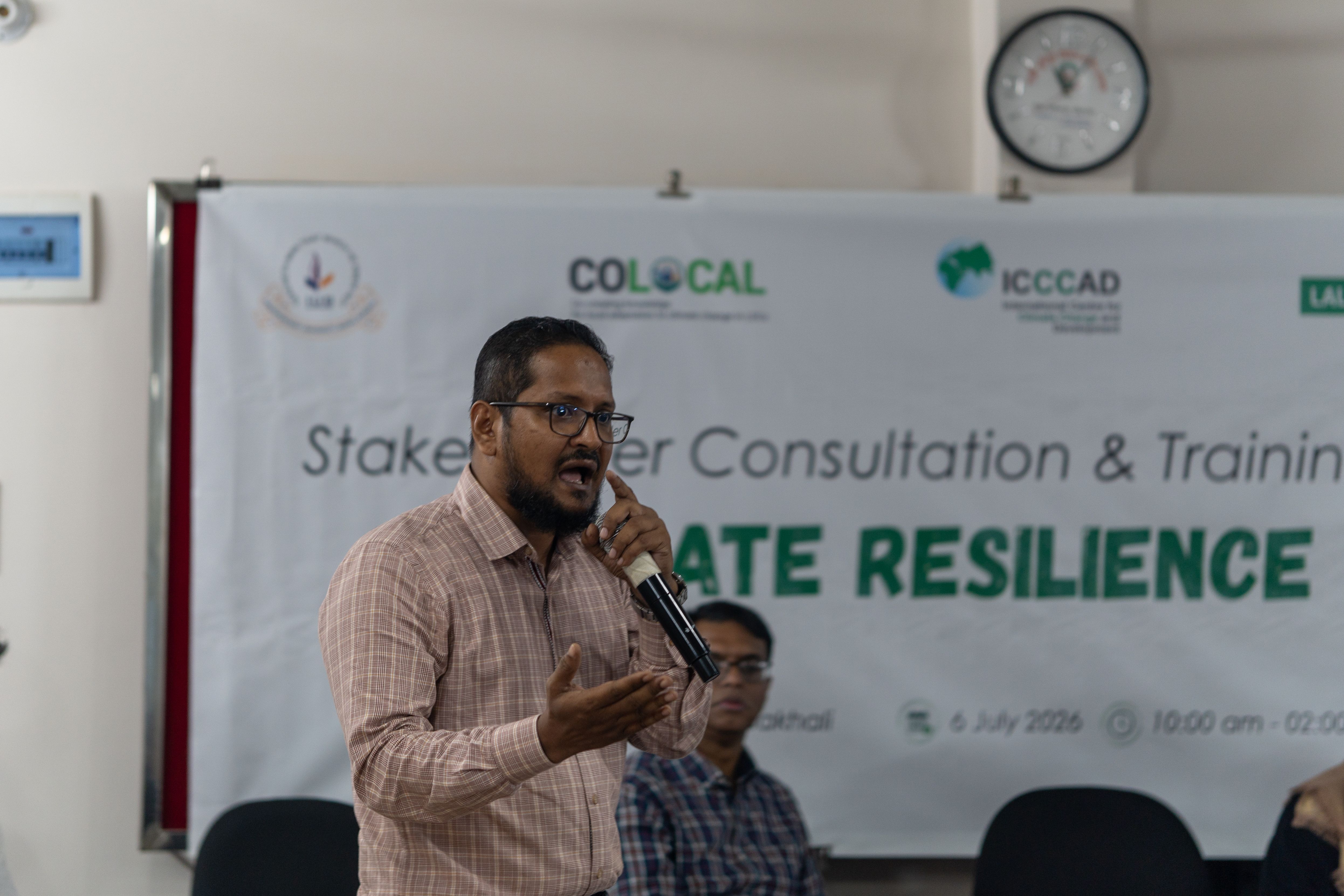
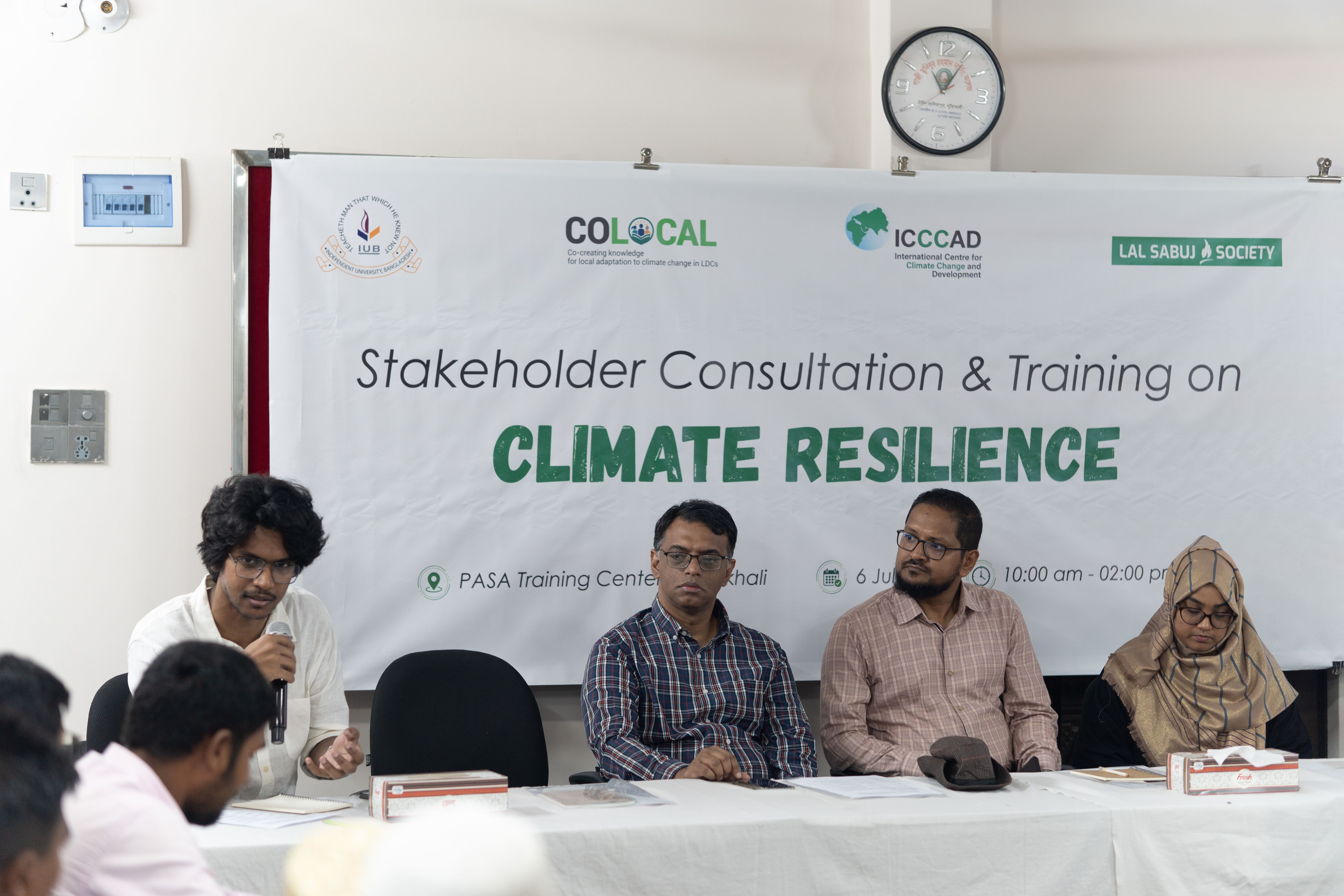
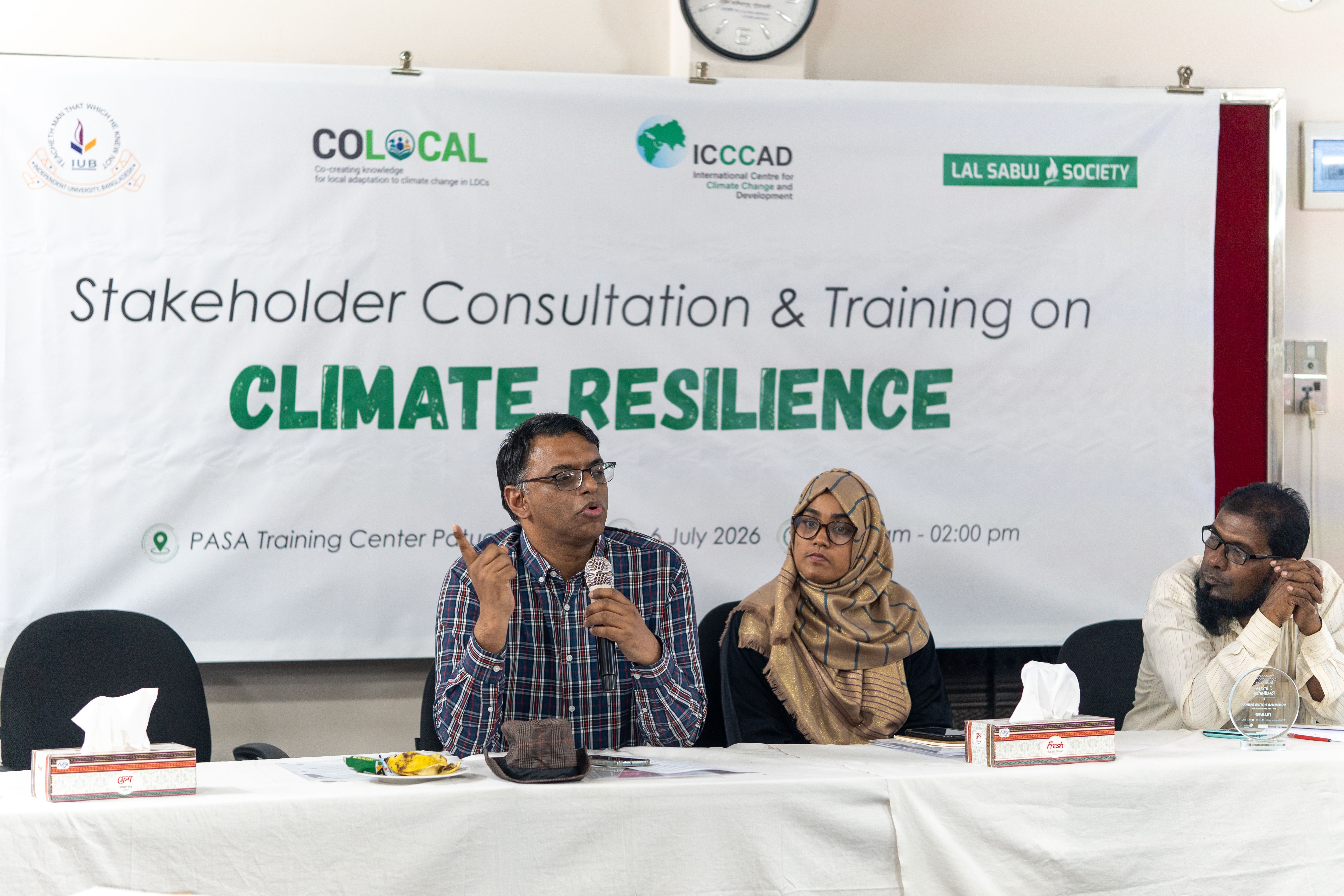
Following up on the needs assessment conducted in May 2025, ICCCAD-IUB and Lal Sabuj Society (LSS) partnered again to arrange a stakeholder consultation and training workshop on locally led adaptation on 06 July 2026 in Patuakhali. The event brought together farmers, fisherfolk, teachers, students, and other community members and created an opportunity for them to directly consult with their local officials.
The session opened with introductions around the room, after which the guests for the day: local govt officers, Dr. Md Habibur Rahman, Nazmul Islam Mazumdar, and Md. Motiur Rahman, were welcomed. Ms. Rumki first introduced LSS's work and framed the workshop as an open dialogue. Al Mamun Rakib of LSS then delivered the keynote, walking the room through findings from LSS's community needs assessment conducted earlier in 2025. It depicted how eighty seven percent of the respondents perceived themselves to be directly impacted by climate change. Cyclone shelters, the assessment found, often sit beyond roads that flood first, making it particularly challenging for women, children, elders, and persons with disabilities. Saline water was linked to skin disease; drinking water had grown scarce; and early warning systems, participants said, rarely reached them in time to prepare.
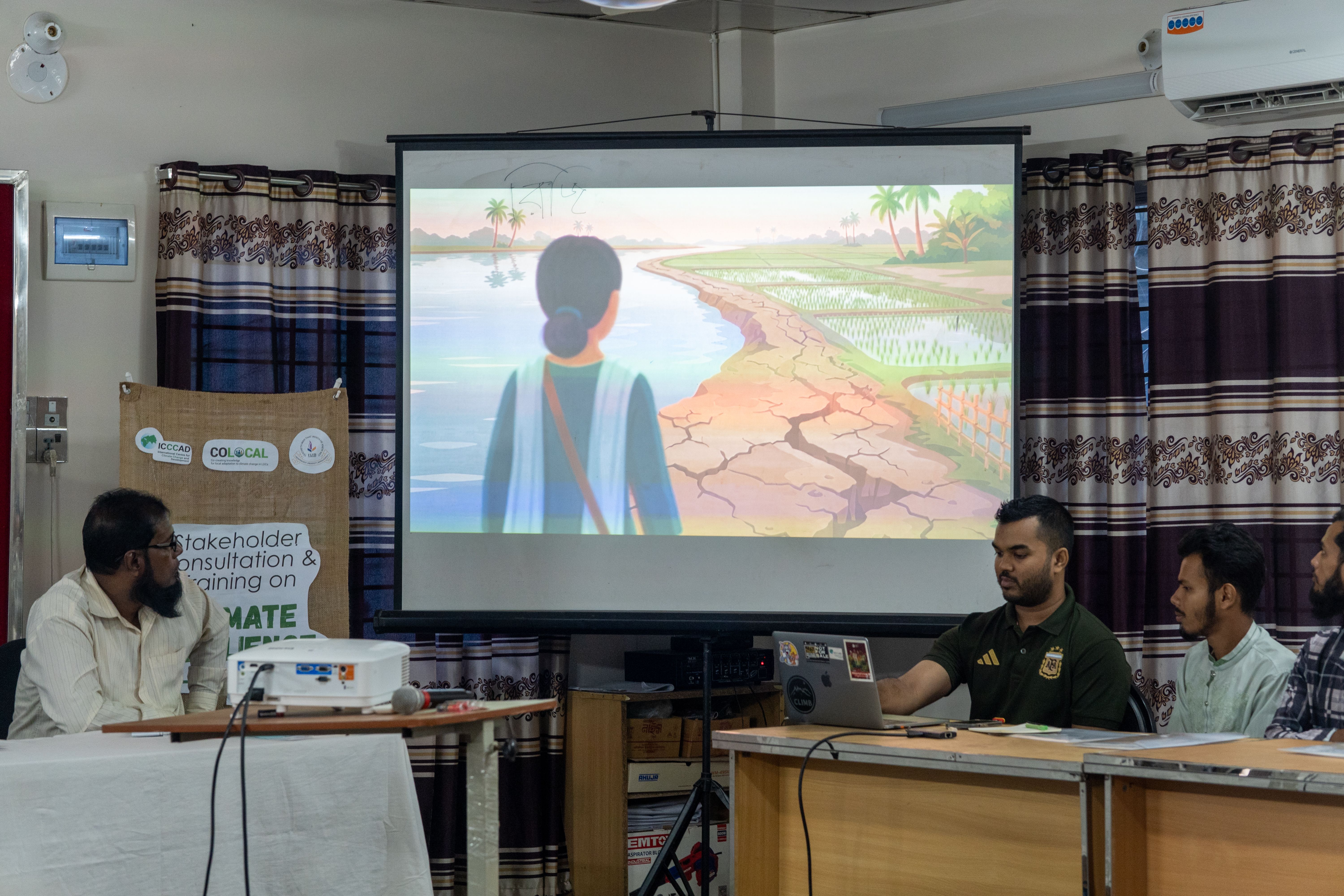
To meet many of the knowledge gaps identified in the assessment, the organisers developed a knowledge product in the form of an animation video, titled “Sumaiya's Journey”, which was then played on screen for the live audience. The production primarily used the local dialect of Patuakhali, and delved into some possible solutions of the community, like waterlogging-resistant rice and raised bed farming to manage salinity, cattle vaccination and clean barns to prevent livestock disease, and clearing standing water around the home to cut mosquito breeding.
The audience praised the animation for its ability to deliver these key messages and start a conversation on climate change adaptation, especially among the youth. But they also weren’t remiss to point out the topics that weren’t included which were equally as important, chief among which was river erosion. Furthermore, they emphasised the need for more hands-on training by the agricultural extension office, and the livestock and fisheries office in the more technical components mentioned in the animation, as well as health and hygiene, wildlife and biodiversity protection, and disaster and lightning safety.
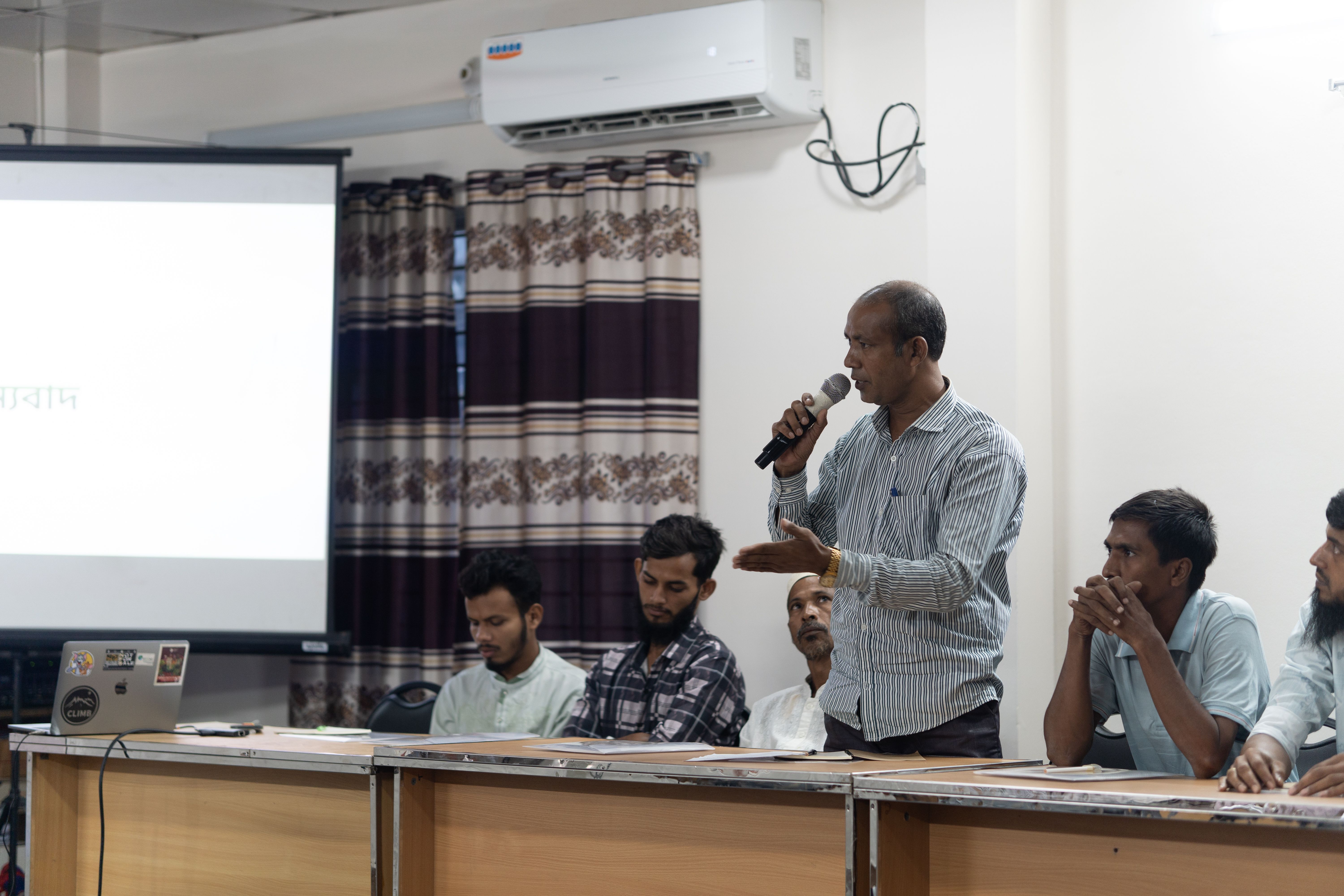
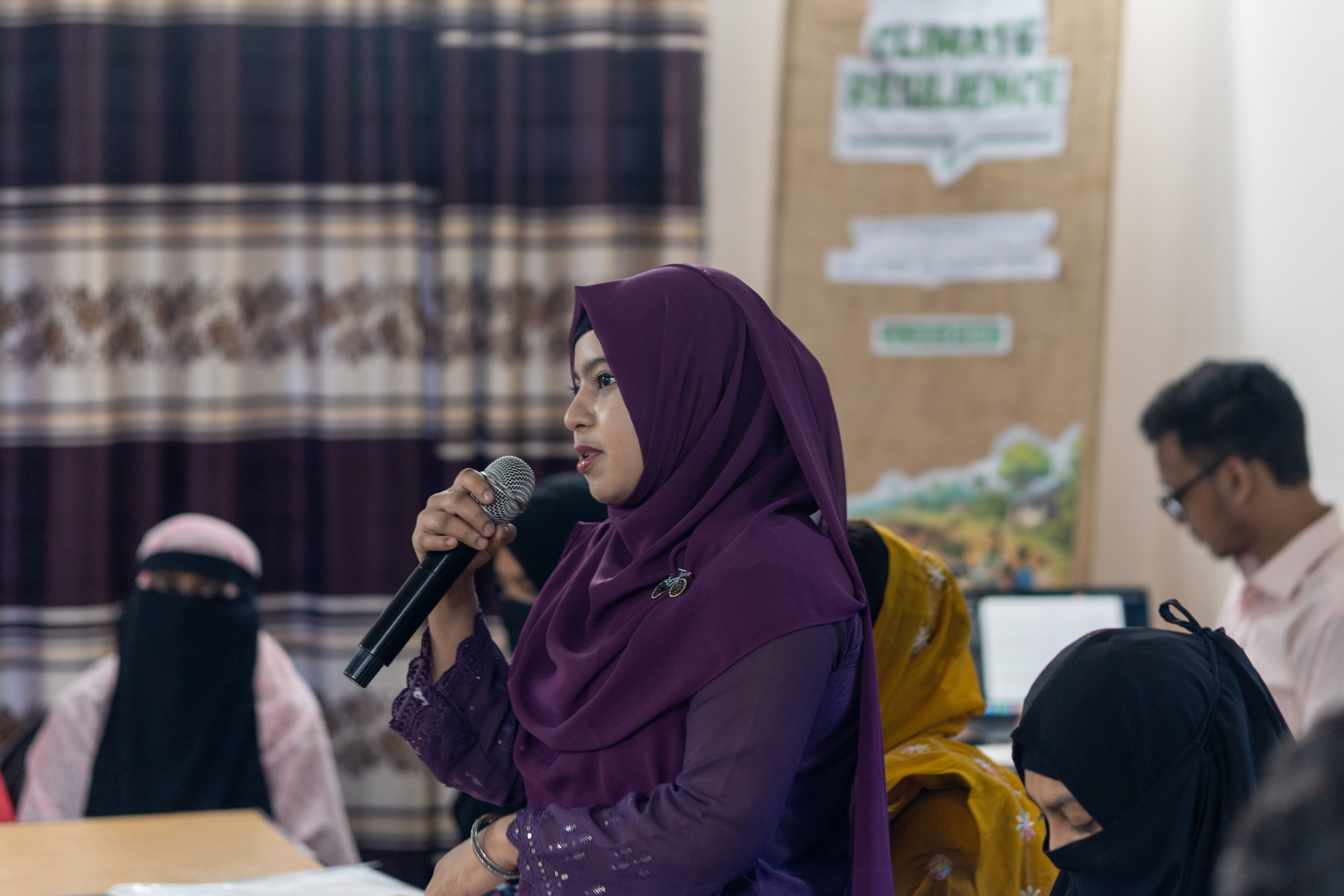
The programme then went into an open discussion format where the local government officers first delivered their own messages for the community, including some technical knowledge and then opened the floor for all participants. This part of the workshop was rich with community insights that displayed the depth of their traditional knowledge, their eagerness to learn, and their commitment to environmental and social justice. One elderly man described again what erosion had cost his family: a home lost, rebuilt, and lost again, farmland gone, and no compensation to show for any of it. "A person sitting on the fifth floor," he said, "will never understand the suffering of someone living under a tree."
A woman raised her hand to talk about something that’s of particular concern for her: mosquitoes breeding in standing water and spreading diseases, and how women and children are mostly at risk of it given the amount of time they spend indoors. Local healthcare facilities being limited in Patuakhali also means that they’re often referred to Dhaka or Barisal for serious cases.
A young entrepreneur present at the event described losing livestock feed and grazing land every time floodwater sits on his fields for weeks. He emphasized the need for proper drainage rather than post disaster relief. On a different note, a forestry worker from the Barisal division addressed the issue of snakes and other wildlife turning up in villages due to their habitats disappearing, and not due to the popular belief of them growing more aggressive. A local journalist present noted that lightning deaths have been rising in recent years, yet there seems to be little attention to this from local authorities. The discussion became more intense when a participant inquired whether specific development projects near the river bank might be connected to the increased rate of erosion in recent years. On this issue, the community members did acknowledge rivers shifting being a natural and historically relevant phenomenon, but they also believed large infrastructure built on or near canals which once drained into the river bringing sediment deposits might also be responsible for the radical change. In terms of recompense for lands lost, some participants mentioned political favouritism playing a role in selecting beneficiaries, which was of quite concern to everyone present. There were stories of local leadership as well, with one participant describing a group of self-motivated young people organising themselves to repair a washed-out village road.
Apart from that, the local agriculture officer, Nazmul Islam Mazumdar, acknowledged the issue of wealthy businessmen leasing large areas of land for a single harvest, making excessive use fertiliser and pesticide, and prioritising short-term profits over long-term soil health. He also acknowledged how Patuakhali still lacks supply of flood and salt tolerant seed varieties for small farmers.
The local livestock officer Dr. Md Habibur Rahman, explained that superior, high yielding cattle breeds tolerate heat and unclean conditions poorly, and advised a higher degree of hybridisation in artificial insemination initiatives, awareness regarding vaccination programmes for cattle, and clean surroundings.
Fisheries officer Md. Motiur Rahman closed the technical sessions by inviting anyone in the room, women included, to sign up for training in computing, electronics and agriculture, before addressing the toils of depleting catch rates along the coast. A former chairman of the Patuakhali Press Club added that initiatives built from the ground up, rather than handed down, are the only kind that actually reach targeted beneficiaries.
K. Ayaz Rabbani closed the day by summarizing the event and thanking everyone, and with his final word, he advised everyone to always continue raising their voices about local issues.