Slide 1 of 1
The Goat Economy and the Colonial Debt: A Tale of Feminised Survival from Bangladesh
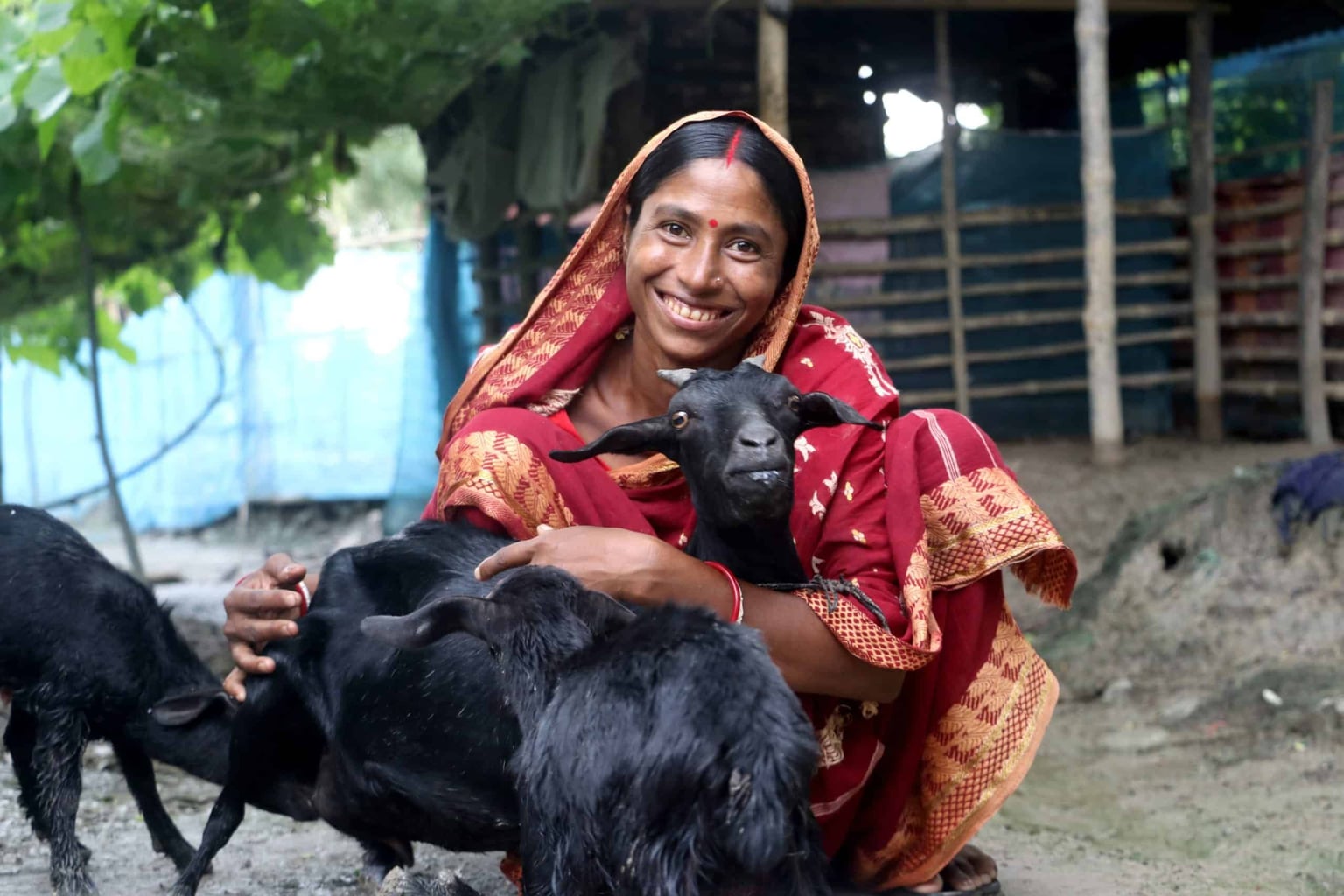
This International Women's Day, as the world celebrates "Women in Climate Action," I want you to picture a different kind of climate leader. Her alias could be Shabnam. She lives in a coastal village in southern Bangladesh, a place where the rivers have turned saline, and cyclones are an annual terror. She does not have a university degree. She has never attended any Conference of the Parties (COP). But in her small, tin-roofed shed, she is the custodian of one of the most effective, time-tested, and overlooked climate adaptation technologies in the world.
She is a goat-keeper. And her story reveals a truth we are not yet ready to celebrate.
For generations, landless women like Shabnam have been the unseen engineers of our survival. When Cyclone Aila inundated coastal Bangladeshi fields with saltwater, it was not a government grant that fed the families. It was the goat. When the floods rose, the goatherdesses hoisted their goats onto raised platforms made of banana trunks, sharing their last inch of dry land with an animal they knew could survive on saline-resistant grasses and kitchen scraps. Through centuries of intimate observation, these women have perfected the breeding of two remarkable local breeds. There is the Black Bengal goat, a compact powerhouse of meat and leather. And there is the Pati goat, a creature so resilient it seems to have webbed feet, capable of swimming to find fodder in a flooded world. This is not merely animal husbandry. It is a sophisticated, gendered, and hyper-local system of climate adaptation. It is a "goat economy" that functions as a living, breathing social safety net.
In this part of the world, goats are a woman's asset, her emergency fund, her children's school fees, her bargaining chip in a household where she owns no land. When a microfinance institution refuses her a loan because she has no collateral, she sells a goat. Like, when her husband falls ill, or the rice harvest fails due to an unseasonal drought. The goat is her bank, insurance, resilience, all wrapped in one humble bleating package.
As per the Food and Agriculture Organisation (FAO) data cited in livestock research, Bangladesh is home to approximately 34 million goats. Of these, a staggering 90 per cent are of the indigenous Black Bengal variety. This is not an accident. This is a monument built by poor, rural women to autonomous, decentralised, and effective climate adaptation. It is a multi-million-dollar, grassroots industry that has functioned for centuries with zero international funding, zero policy fanfare, and zero academic awards. And yet, when we compile our glossy reports for International Women's Day, where is Shabnam? Where is her goat?
She is invisible. Because her form of action does not fit the global script.
To understand why, we must look at the erasure of women's work from our economic and political consciousness. This has deep roots in the colonial project. When the British administrators came to the Bengal Delta, they were interested in one thing: revenue. The subsistence labour of women, the cyclical economy of the homestead, the intricate knowledge of local breeds and plants, all of this was invisible to their ledgers. This colonial perspective created a hierarchy of value that still dictates what we deem worthy of investment today. This same colonial logic has been seamlessly adopted by the modern climate finance industry. We call it neo-colonialism. The global North, which bears historical responsibility for the emissions destabilising our climate, now dictates the solutions: the hard infrastructure we love to celebrate.
Shabnam's goat economy, on the other hand, is soft. It is messy and decentralised. Its returns are not measured in dollars, but in lives saved, nutrition provided, and dignity preserved. It is an infrastructure of care, not concrete. And because it cannot be commodified and sold back to us, it is ignored. The climate finance system, built on the foundations of a colonial worldview, literally cannot see it. Therefore, when we talk about celebrating women in climate action, we must ask ourselves a deeply uncomfortable question. Whose actions are we really celebrating? Are we celebrating the women who fit neatly into the neo-colonial, corporate-friendly model of resilience? Or are we willing to do the hard work of seeing, valuing, and funding the invisible, unpaid, and ingenious labour of the millions like Shabnam who are the true first responders of the climate crisis?
A genuine celebration would require a fundamental shift. It would mean treating indigenous livestock breeds as a national climate asset. It would mean directing adaptation finance not just to multinational engineering firms, but to women's collectives for feed banks, mobile veterinary services, and small-scale value chains for goat products. It would mean researchers and policymakers spending less time in conferences and more time in the homesteads, learning from the women who have been adapting for centuries. Let us not just put Shabnam in a photograph. Let us give her a seat at the table where the budgets are decided. Let us decolonise our climate finance so that it can finally recognise that sometimes, the most powerful technology for survival is not a dam or a satellite, but a goat.
And that is a truth worth celebrating.
Nishat Tasnim is currently working as a Research Officer at the International Centre for Climate Change and Development (ICCCAD), and she can be reached at nishat.tasnim@icccad.org
Picture: ADRA International