Team Influencer conducted session on Climate Justice at ECC ’25 conference
Slide 1 of 3
Team Influencer conducted session on Climate Justice at ECC ’25 conference
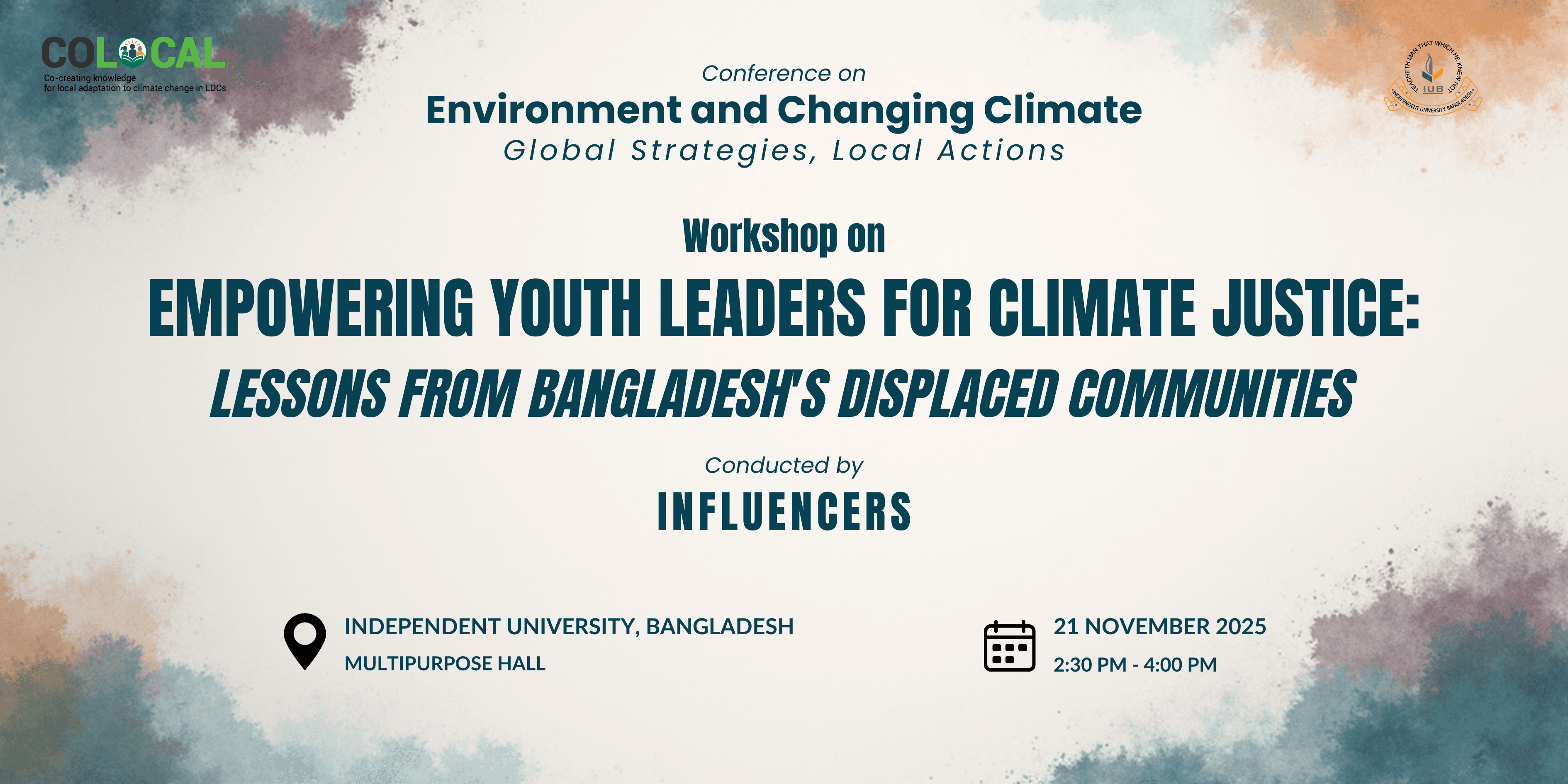
The session titled “Empowering Youth Leaders for Climate Justice: Lessons from Bangladesh’s Displaced Communities” was organized by Team INFLUENCERS at the Environment and Changing Climate 2025 Conference at Independent University, Bangladesh. The session brought together young participants to discuss climate change and displacement in Bangladesh. It created a space where youth could learn about climate justice and reflect on how climate impacts affect vulnerable communities. The session combined research findings with interactive activities to make the discussion more engaging and practical.
The session was designed to help participants understand the basic ideas of climate justice, especially in the context of displacement in Bangladesh. It aimed to share real field experiences about the problems faced by displaced communities and their coping strategies. The session also focused on improving youth leadership, teamwork, and problem-solving skills. Participants were encouraged to think from different stakeholder perspectives and develop practical adaptation ideas through group-based poster presentations.
During the presentation, the facilitators explained that climate change is not only an environmental issue but also a social and human rights issue. They shared examples from field research, such as forced relocation due to cyclones, river erosion, and salinity. They also discussed ongoing problems like waterlogging, heatwaves, and poor living conditions in informal settlements. Special attention was given to the greater risks faced by women and children. The presentation highlighted that youth can play an important role in raising awareness, collecting information, and supporting fair climate policies.
The second part of the session was a participatory workshop called “From Scenarios to Solutions.” Participants were divided into four groups representing NGOs, government agencies, displaced communities, and youth representatives. Each group discussed key challenges, possible short- and long-term solutions, gender issues, and the importance of local knowledge. After brainstorming, they created posters to present their ideas. In the group presentations, participants explained their solutions and shared their reasoning. This activity helped them understand different viewpoints and work together on practical solutions.
The session showed that youth can clearly understand climate justice issues and think critically about real-life problems. Participants were able to connect theory with practical solutions. The mix of presentation and interactive activities made the session effective and engaging. It ended with a shared understanding of the need for fair and inclusive climate action in Bangladesh