Slide 1 of 4
Short Course on Community based Adaptation Held in Satkhira
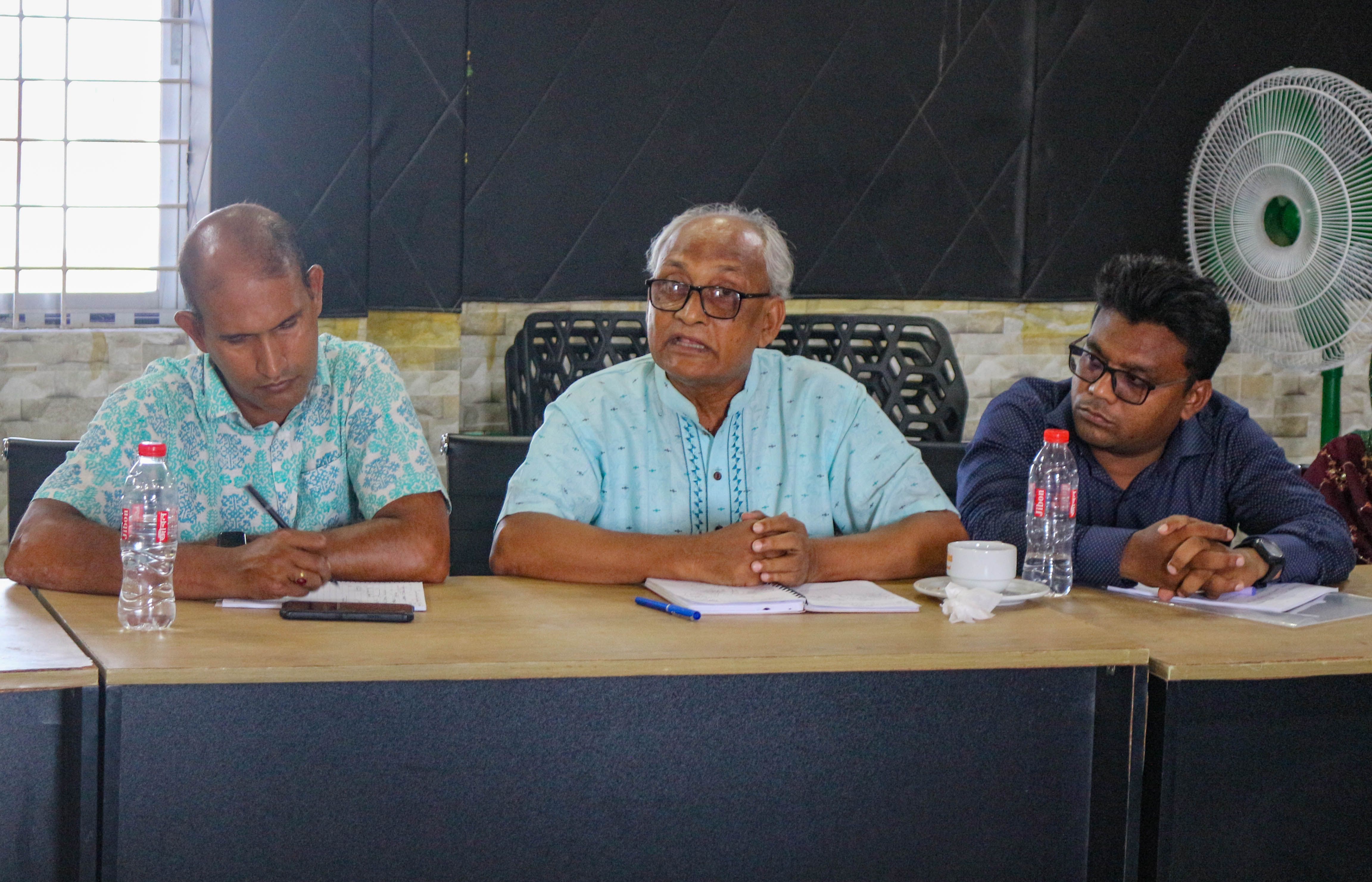
The Independent University, Bangladesh (IUB), in collaboration with the International Centre for Climate Change and Development (ICCCAD), organized a short course titled “Community-Based Adaptation: Prospects of Satkhira” on 28 September 2024. The event took place in Satkhira Sadar and aimed to build local capacity and promote practical understanding of Community based Adaptation (CBA) in one of Bangladesh’s most climate-vulnerable regions.
Satkhira, located on the country’s southwestern coast, faces frequent floods, salinity intrusion, and cyclones. The one-day course brought together 16 participants, including community members, local government officials, NGO representatives, youth leaders, and journalists. They shared their experiences and discussed local adaptation practices in light of recent devastating floods. The session began with an introduction from COLOCAL Project Officer Fahmid Mohtasin, who explained the project’s goal of promoting collaborative, community-led research and breaking away from top-down approaches. Rafia Anjum Rimi, a COLOCAL Fellow from IUB, conducted the knowledge-building session. She introduced the basics of climate change adaptation and shared several successful local examples such as floating farming, clay pitcher irrigation, and hanging vegetable production. These innovative methods demonstrate how communities in flood-prone and saline-affected areas are adapting agriculture to survive changing climatic conditions.
In an open discussion moderated by Dr. K. Ayaz Rabbani, Dean of the School of Environment and Life Sciences, participants reflected on recent challenges and lessons. They highlighted recurring floods, poor infrastructure, and weak local coordination as major barriers. Many called for more flexible adaptation policies and stronger collaboration among government agencies and NGOs. Concerns over salinity intrusion, soil degradation, and declining crop yields were raised, alongside urgent needs for saline-resistant seeds and long-term water management solutions.
Participants also discussed the importance of community leadership, training, and exchange visits to strengthen local knowledge-sharing. Public health risks, particularly those affecting women and children due to saline water exposure, were emphasized. The event ended with a collective call for practical, inclusive, and sustainable adaptation actions to safeguard Satkhira’s communities.