Education & Training

Roundtable Discussion on CCD Course Design to Incorporate LLA

Roundtable Discussion on CCD Course Design to Incorporate LLA

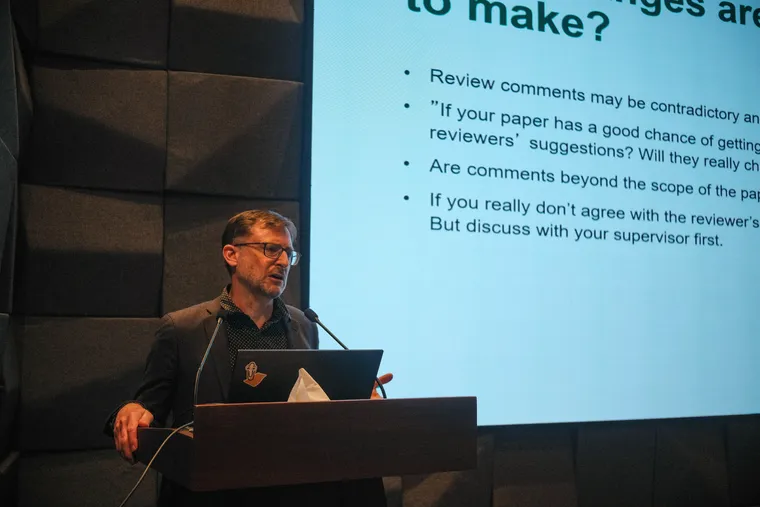
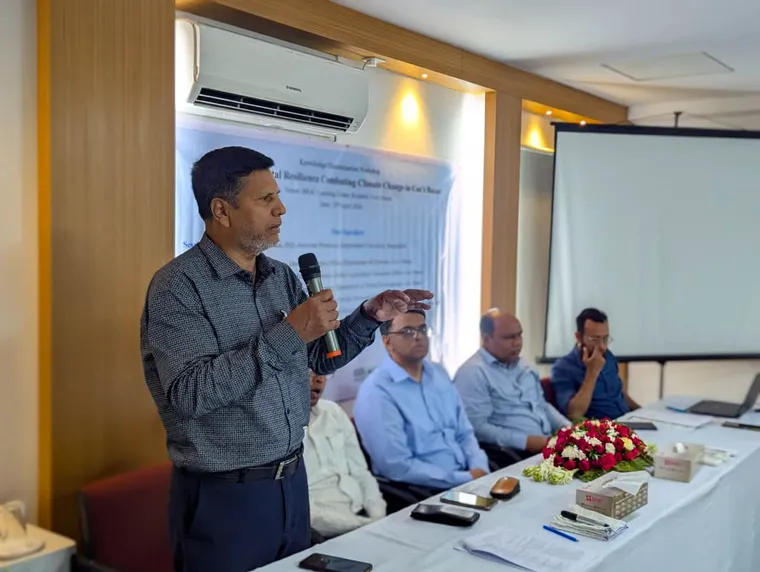
The COLOCAL project arranged a roundtable discussion on November 30, 2024 at the Independent University, Bangladesh (IUB) campus to gather inputs from experts regarding the development of academic modules focusing on Community-based Adaptation (CBA) and Locally Led Adaptation (LLA) that is later planned to be implemented into a course of the Climate Change and Development (CCD) MSc. at the Department of Environmental Science and Management, IUB. The COLOCAL team for the event included the project coordinator, Dr. K. A. Rabbani and the project officer, Fahmid Mohtasin, who brought together LLA specialists from the International Center for Climate Change and Development (ICCCAD), including Savio Rousseau Rozario and Rawnak Jahan Khan Ranon, and ongoing MSc students under the CCD programme. It was a fruitful discussion that raised many interesting aspects of developing an effective course on the topic. The participants and the team were all in agreement that the course must first introduce the key concepts, principles, history, and the evolution of CBA to LLA. The need for showcasing successful and unsuccessful case studies of LLA was also mentioned. Furthermore, it was made clear from the discussion that the course needed to follow a practical approach to learning through engagement with communities and external stakeholders rather than following the traditional structure of an academic course. This was planned to be achieved through a field assignment for the students in climate vulnerable areas of the country and through paper presentations to stay updated on the contemporary literature on LLA. Prior to the field assignment, the need for a module introducing the tools and techniques of LLA was also communicated. The discussion then progressed to talks of possible administrative limitations and the changes required that could add to the success or failure of the course. ***Media Coverage*** https://iub.ac.bd/news-and-events/news-archive/2024-December/675bd0e0aa01e0f370d4687d

Short Course

Half-day Short Course on Climate Change and Locally-Led Adaptation

Half-day Short Course on Climate Change and Locally-Led Adaptation

On 23 February, 2025, the Department of Environmental Science and Management, under the COLOCAL Project, hosted a half-day short course featuring two compelling presentations on climate change adaptation and an interactive game on social inclusion. With an aim to introduce key aspects of climate change to people from a wide variety of disciplines lacking exposure to these concepts, the event attracted students majoring in economics, computer science, business studies, as well as graduates and professionals. The first session was taken by Dr. Laura Kuhl, an associate professor from Northeastern University in Boston. It introduced the concepts of increasing disasters, global emissions, the carbon budget, climate financing, and climate justice, as well as the intersections of climate risk with poverty and other industries. She later emphasized how locally-led adaptation can be a possible solution for many of the climatological crises we are facing today. This was followed by a session on urban adaptation by Abeda Tabassum, a PhD candidate from the School of Earth and Environmental Sciences at Seoul National University. She shared some of the interesting wind models she is working on while also breaking down key concepts like urban heat island, urban breeze circulation, cool roofs, etc. She also talked candidly about her own graduate school application process and her experiences in Korea, and extended support to any student interested in following a similar path. The final session, conducted by Afsara Binte Mirza and Rawnak Jahan Khan from the International Center for Climate Change and Development, was an interactive game that introduced the ideas of social inclusion to the participants. Each of them received a character card representing a key stakeholder from a cyclone affected rural community. They were then encouraged to play the role of these characters as they attempted to build an action plan for future disaster events. The best performers received books as prizes at the end of the game. A participant playing the role of a 50-year-old amputee even exclaimed later how this game helped her to gain perspective on the struggles of persons with disabilities that often receive little support in our communities. ***Media Coverage*** https://iub.ac.bd/news-and-events/news-archive/2025-February/67c5468dcae97613b98b27ac

Locally Led Adaptation for All: The COLOCAL Project Introduces the Concept of LLA through Experts and Interactive Games

Locally Led Adaptation for All: The COLOCAL Project Introduces the Concept of LLA through Experts and Interactive Games

On June 24th, the COLOCAL Project hosted an engaging half-day introductory short course on Locally Led Adaptation (LLA), attracting participants from a wide range of academic disciplines. The course was designed to be interactive and informative, aiming to introduce core LLA concepts to a diverse audience. The session opened with a lively icebreaker quiz conducted by Rawnak Jahan Khan Ranon and Samiha Saleha from the International Centre for Climate Change and Development (ICCCAD), where participants shared their existing knowledge and perceptions of common LLA terms and ideas. This set the tone for the following session led by Savio Rousseau Rozario, LLA Programme Coordinator at ICCCAD, who explored the foundations and historical context of LLA. His session concluded with another interactive quiz, with full engagement of the participants. After a short break, Fahmid Mohtasin, Project Officer for COLOCAL, facilitated an interactive game developed by the International Federation for Red Cross (IFCC), focusing on climate change adaptation and disaster risk reduction. The game simulated the impacts of climate change and emphasized the importance of climate-smart disaster risk reduction, decision-making, and using forecasts to guide community-based action. Participants gained firsthand understanding of managing vulnerability and responding to climate-related risks. The final session was conducted by Sumaiya Binte Selim, Program Coordinator of the ICCCAD Youth team, who highlighted the critical role of youth in climate action. Her team shared real-world examples of how young people are actively engaging in LLA initiatives and creating impact at the community level. The event concluded with closing remarks by Dr. K. Ayaz Rabbani, Dean of the School of Environment and Life Sciences. He commended the organizers and participants for their enthusiasm and distributed prizes to the winners of the games and quizzes, bringing the session to a warm close. ***Media Coverage*** https://iub.ac.bd/news-and-events/news-archive/2025-June/686b8c132cb49b16cbe9f92c

Short Course on Community based Adaptation Held in Satkhira

Short Course on Community based Adaptation Held in Satkhira

The Independent University, Bangladesh (IUB), in collaboration with the International Centre for Climate Change and Development (ICCCAD), organized a short course titled “Community-Based Adaptation: Prospects of Satkhira” on 28 September 2024. The event took place in Satkhira Sadar and aimed to build local capacity and promote practical understanding of Community based Adaptation (CBA) in one of Bangladesh’s most climate-vulnerable regions. Satkhira, located on the country’s southwestern coast, faces frequent floods, salinity intrusion, and cyclones. The one-day course brought together 16 participants, including community members, local government officials, NGO representatives, youth leaders, and journalists. They shared their experiences and discussed local adaptation practices in light of recent devastating floods. The session began with an introduction from COLOCAL Project Officer Fahmid Mohtasin, who explained the project’s goal of promoting collaborative, community-led research and breaking away from top-down approaches. Rafia Anjum Rimi, a COLOCAL Fellow from IUB, conducted the knowledge-building session. She introduced the basics of climate change adaptation and shared several successful local examples such as floating farming, clay pitcher irrigation, and hanging vegetable production. These innovative methods demonstrate how communities in flood-prone and saline-affected areas are adapting agriculture to survive changing climatic conditions. In an open discussion moderated by Dr. K. Ayaz Rabbani, Dean of the School of Environment and Life Sciences, participants reflected on recent challenges and lessons. They highlighted recurring floods, poor infrastructure, and weak local coordination as major barriers. Many called for more flexible adaptation policies and stronger collaboration among government agencies and NGOs. Concerns over salinity intrusion, soil degradation, and declining crop yields were raised, alongside urgent needs for saline-resistant seeds and long-term water management solutions. Participants also discussed the importance of community leadership, training, and exchange visits to strengthen local knowledge-sharing. Public health risks, particularly those affecting women and children due to saline water exposure, were emphasized. The event ended with a collective call for practical, inclusive, and sustainable adaptation actions to safeguard Satkhira’s communities.

Training Workshop

COLOCAL Partners with Lal Sabuj Society to Conduct Community Needs Assessment to Strengthen Climate Adaptation in Patuakhali’s Erosion-Prone Areas

COLOCAL Partners with Lal Sabuj Society to Conduct Community Needs Assessment to Strengthen Climate Adaptation in Patuakhali’s Erosion-Prone Areas

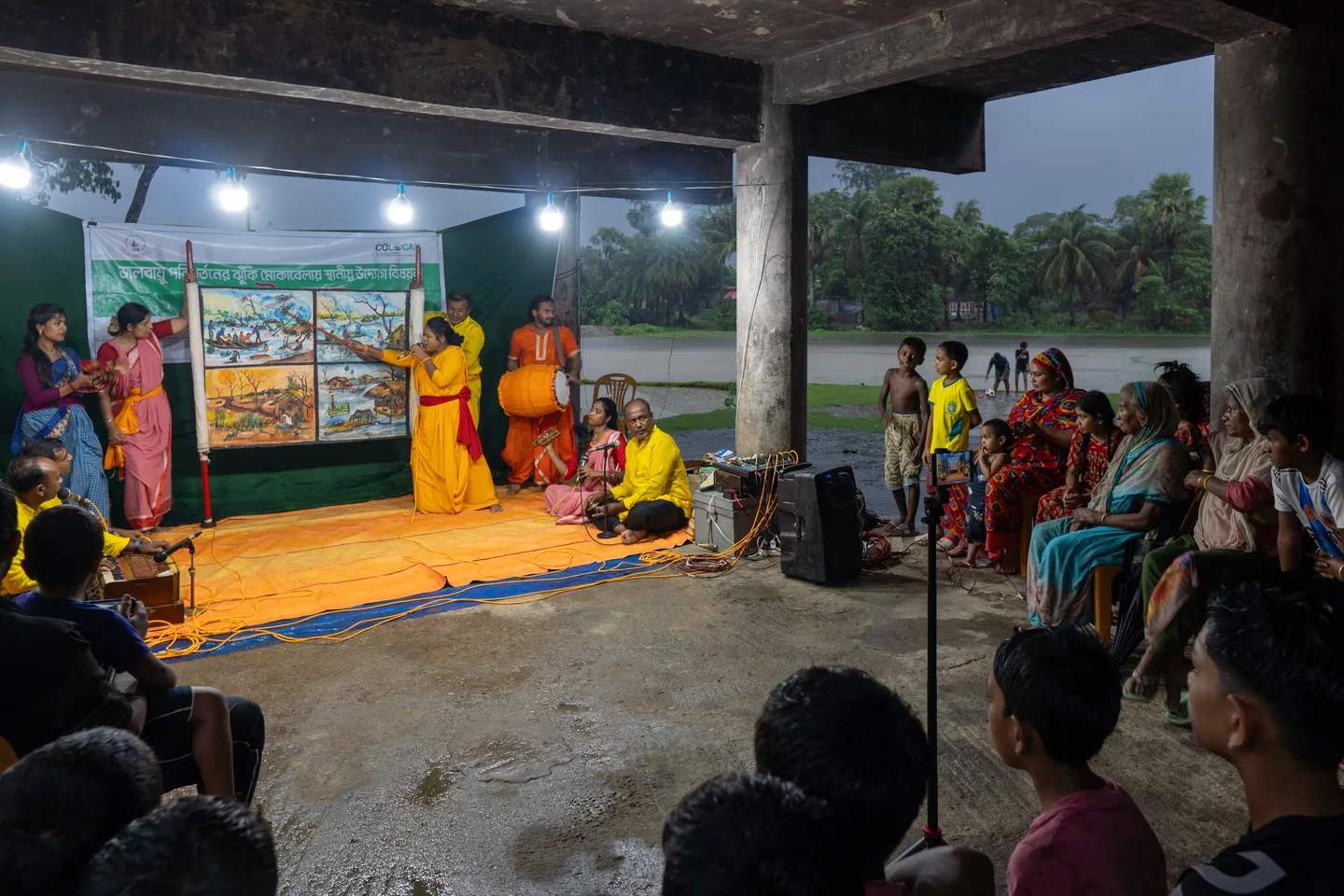
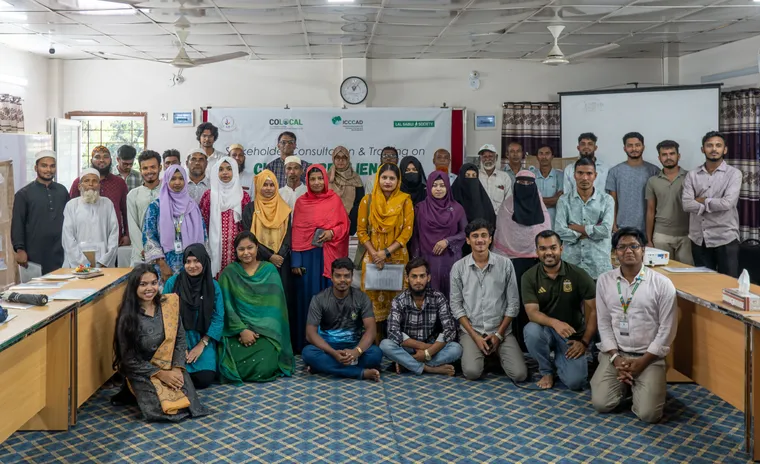
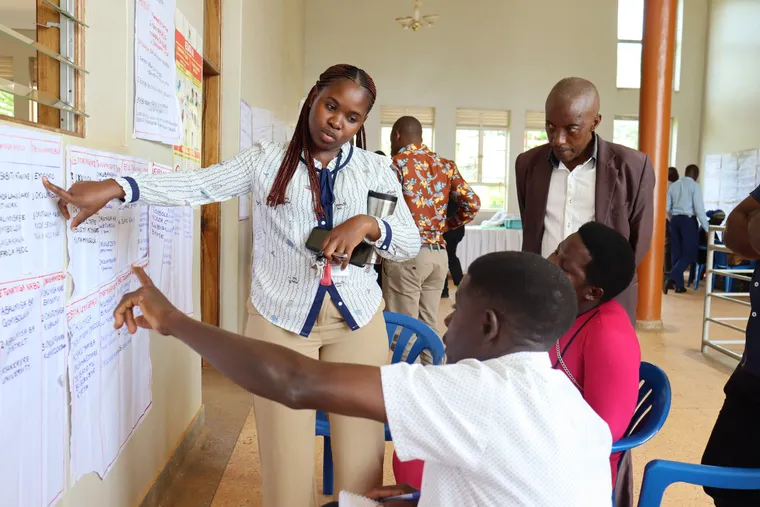
On May 21 and 22, the COLOCAL project, under DESM, IUB, conducted a needs assessment in the river erosion risk areas of the Bauphal and Mirzaganj upazilas in Patuakhali district. The project partnered with the local youth organization Lal Sabuj Society, whose community ties and local insight were instrumental in facilitating meaningful engagement with residents. With this assessment and the planned training workshop following it, COLOCAL aims to strengthen the climate change adaptation knowledge and capacity of communities most exposed to environmental risks. During the assessment, the team—working closely with Lal Sabuj Society—engaged community members through group discussions and interviews to gauge their awareness of climate change and its local impacts. The assessment revealed that knowledge regarding climate change is very limited in these areas as government and non-government activities of this nature are mostly concentrated in the Kalapara upazilla of Patukhali. The conversations also revealed how communities prioritize more creative mediums like videos and games for their learning needs rather than the traditional formats, but there was also some interest in the traditional seminar format as it provides communities with a platform to voice their concerns to local leaders and administrators. The findings from this assessment will directly inform the development of training content tailored to the community’s needs. In the coming months, the project team will return to Patuakhali to deliver a full-day workshop focused on closing the identified knowledge gaps. This participatory approach, strengthened by local partnerships, ensures that the training will be both relevant and practical, supporting local resilience through stronger, community-driven climate adaptation strategies.

COLOCAL Partners with Nirmol Bangladesh to Conduct Community Needs Assessment to Strengthen Adaptation Capacity in Cox Bazar’s Cyclone-Prone Areas

COLOCAL Partners with Nirmol Bangladesh to Conduct Community Needs Assessment to Strengthen Adaptation Capacity in Cox Bazar’s Cyclone-Prone Areas

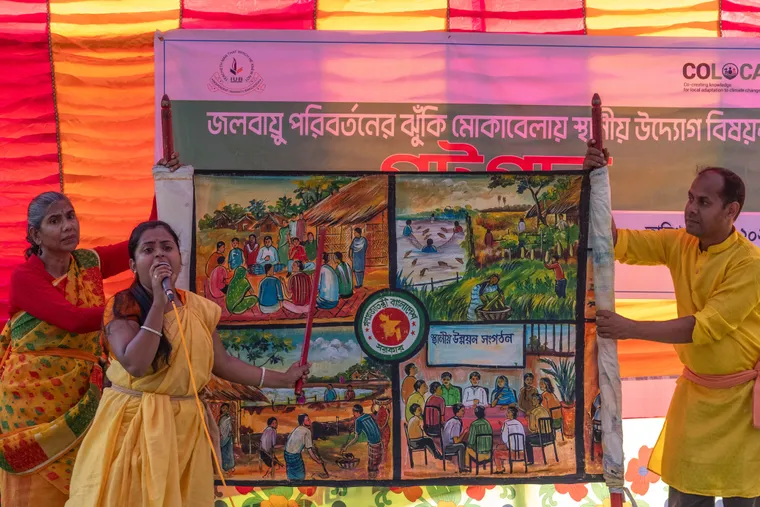
On May 21 and 22, the COLOCAL project, under DESM, IUB, conducted a needs assessment in the cyclone risk areas: Najiratake, Khuruskhul, and Choufolondi of Cox’s Bazar district. The project partnered with Nirmol Bangladesh, whose community ties and local insight were instrumental in facilitating meaningful engagement with the farmer and fisherman communities there. With this assessment and the planned training workshop following it, COLOCAL aims to co-create knowledge outputs with a view to strengthen the adaptation capacity of communities most exposed to environmental risks. During the assessment, the team—working closely with Nirmol Bangladesh—engaged community members through group discussions and interviews to gauge their awareness of climate change and its local impacts. Some interesting findings included the locals’ belief of the Matarbari Coal Powerplant, as well as the Cox’s Bazar Wind Powerplant disrupting the ecological balance. They also expressed discontent for being excluded in the decision-making process for fishing bans. Furthermore, they heavily emphasized on the negative impacts of trawling in the region, resulting in ecological damage, overfishing, and threatening their livelihoods. As for livelihood diversification programs in the area, the fisherman communities showed a general lack of interest in activities that detach themselves completely from the lifestyle they are generationally accustomed to. The COLOCAL project intends to leverage these findings to directly inform the development of training modules. In the coming months, the team intends to return to these areas to conduct a co-creation workshop focused on building the knowledge capacity and also creating a communication platform for the communities and the local government. This participatory approach, strengthened by local partnerships, ensures that the training will be both relevant and practical, supporting local resilience through stronger, community-driven climate adaptation strategies. ***Media Coverage*** https://iub.ac.bd/news-and-events/news-archive/2025-July/6885fa558ea81bddb05a9f09